
2026 Farmland Report
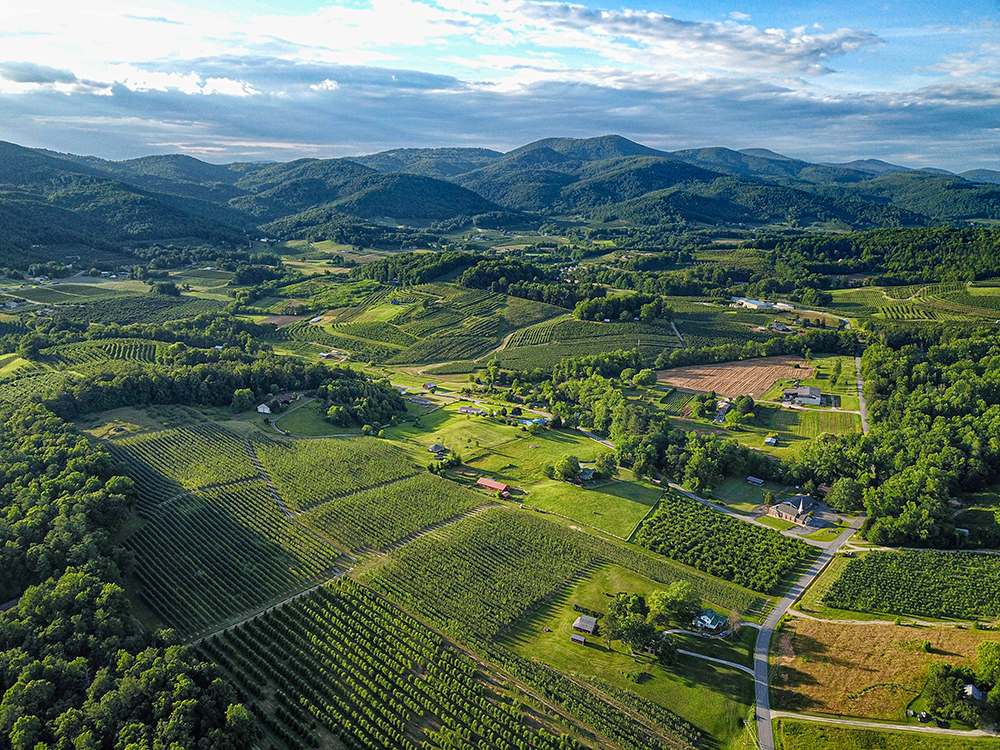
Between 2017 and 2022, Henderson County lost just over 8,000 acres of farmland -- leaving nearly 33,000 acres in current agricultural use. In the same time frame, North Carolina lost 300,000 acres and Appalachia lost 2.52 million acres. The rural central and southern portions of the region lost farmland the fastest -- a decreased productivity worth over $14 billion. Nearly 75% of our region’s farmland is family owned -- and Henderson County’s producers are largely within that statistic. Family-owned producers historically face significant struggles as they are impacted more deeply by economic hardships, fluctuations in markets and socioeconomic hurdles.
Farmland loss in Western North Carolina, and greater Appalachia, isn’t characterized by a singular issue but is rather an integral part in a much larger puzzle. Over the past decade, the region has lost active agricultural land at a rate of approximately 54 acres per hour, resulting in a diminished ability for the region to sustain or grow its economic health while also proving detrimental to the health of the communities and individuals nearby. This loss should be understood through a broader sense of conditions that shape the Appalachian region. Studies suggest that socioeconomic challenges in the region act as place-based limitations rather than temporary fluctuations seen throughout the country. Poverty, household income limitations, transportation barriers, and food insecurity oftentimes overlap geographically and reinforce one another in a repetitive loop -- creating generational barriers for communities in the area. The disappearance of agricultural land contributes yet another layer to these interconnected obstacles. Reduced local production capacity increases reliance on imported goods and a reliance on commercial grocery networks, introducing additional transportation and distribution costs that may disproportionately affect low-income populations. As household budgets become increasingly strained, greater dependence on external food systems can further intensify affordability challenges. An invisible hurdle that often goes overlooked is the ways in which grocery prices are determined. Grocery retailers use a mix of factors in determining the cost of goods -- including (but not limited to) local competition, operating costs, products available, and logistics. In areas experiencing a geographic limitation of grocery retailers -- like food deserts -- people are either left with minimal options for shopping, which allows stores to maintain higher prices due to the lack of competition, or they are forced to travel further to access a retailer. Due to the overlap in geographic and financial constraints within food deserts, when those households need to go to a different city or town to purchase groceries -- those prices will be determined based on the local costs and competition and not the area in which the household is located, leaving the household subjected to higher costs and the burden of traveling further to access groceries.
The relationship between farmland and food security as food access measurements typically fall short in capturing how rural communities obtain food. Standard food desert designations evaluate geographic proximity and economic access to retail options without including a wider network of food sources often seen in rural communities. Farmers markets or farm stands, neighbor bartering or food exchanges, hunting, fishing, etc. function as community-based food networks and act as a supplemental pathway to food access. These informal systems represent an important piece of Appalachians food culture and resilience. As farmland disappears, these alternative access systems become increasingly limited. The loss of farmland represents more than a decline in acreage; it reduces local food production capabilities and weakens community mechanisms that historically helped low-income households withstand economic hardships.
Consequently, farmland preservation requires ideas and approaches that can utilize traditional methods while also recognizing that this issue is multidimensional and nuanced. Traditional preservation methods include zoning protections, land-use policies, easements, and (in the case of Henderson County, and wider North Carolina) agricultural districts. All of which are designed to reduce developmental pressure on productive agricultural land. However, preservation strategies focused solely on maintaining acreage may not address the influencing causes of agricultural decline. Economic pressures felt by rural households, including stagnant wages, increasing land maintenance costs, and climate challenges (such as natural disasters or hardships) make the idea of selling farmland more economically attractive, or in some cases, unavoidable.
Strengthening local agricultural economies, uplifting family farms, investing in local food systems, and creating economic opportunities provide sustainable pathways for maintaining agricultural landscapes. Recognizing the social and cultural importance of farmland within our community -- not just as a food producer but also as a piece of our community identity and multigenerational resilience is a benefit to farmland preservation as a whole and encourages a stronger relationship between neighbors. These efforts can be accomplished through outreach as well as partnerships between farms and between farms and providers such as food banks in addition to the traditional methods listed above.
The loss of farmland in our county’s community, and our shared regional community, is a blanket thrown over a stack of growing issues that extend beyond agriculture itself. The decline in acreage occurs alongside persistent patterns of socioeconomic disadvantages. As communities continue to adapt to changing economic transition, preserving our farmland provides an opportunity to strengthen our food systems while maintaining a piece of our shared history and resilience. This means that we, as a local government, are tasked with addressing farmland loss as a broader issue within the socioeconomic system in which it exists.
More information on Henderson County’s farmland preservation tools and methods can be found in the Farmland Preservation Guide provided.
Supporting Documents
 2026 Farmland Report (307 KB)